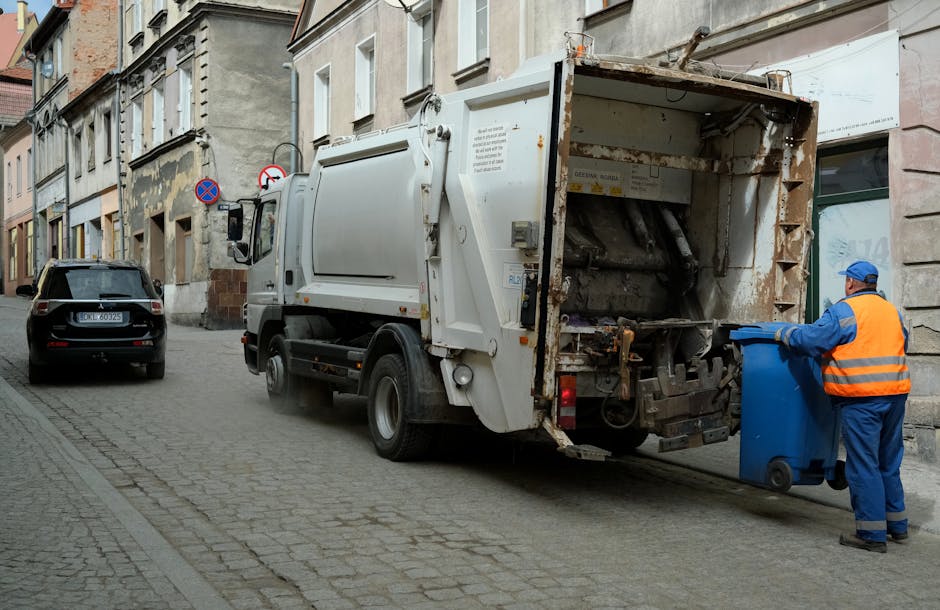
Shoreditch High Street rubbish removal guide
If you live, work, or manage a property near Shoreditch High Street, rubbish has a habit of appearing at the worst possible moment. A flat clear-out after a move, office clutter building up in a back room, a pile of builder's waste after a quick refurb - it all adds up fast. This Shoreditch High Street rubbish removal guide is here to make the whole process feel less messy, less rushed, and a lot more manageable.
You will find clear guidance on how rubbish removal works, what to expect, what to avoid, and how to choose the right approach for your situation. There's practical advice for homes, flats, offices, landlords, trades, and anyone else trying to clear waste without turning a busy day into a bigger headache. Simple enough, really. But not always easy in practice.
For a broader overview of service options, it can help to start with the main waste removal service, then work out whether your load is better suited to a specialist clearance such as house clearance, flat clearance, or office clearance.
Table of Contents
- Why Shoreditch High Street rubbish removal guide Matters
- How Shoreditch High Street rubbish removal guide Works
- Key Benefits and Practical Advantages
- Who This Is For and When It Makes Sense
- Step-by-Step Guidance
- Expert Tips for Better Results
- Common Mistakes to Avoid
- Tools, Resources and Recommendations
- Law, Compliance, Standards, or Best Practice
- Options, Methods, or Comparison Table
- Case Study or Real-World Example
- Practical Checklist
- Conclusion
- Frequently Asked Questions
Why Shoreditch High Street rubbish removal guide Matters
Shoreditch High Street is one of those parts of London where space is tight, access can be awkward, and the pace never really slows down. That matters when you are trying to get rid of rubbish. One awkward sofa, a stack of broken office chairs, or a few bags left in the wrong place can quickly become a problem for neighbours, staff, or building management.
A good rubbish removal plan matters because it saves time, keeps shared spaces usable, and helps you avoid the classic last-minute scramble. It also helps you choose the right service the first time. That sounds obvious, but people often mix up general rubbish removal, bulky item disposal, and full property clearance. The result? Extra costs, wasted time, and an even bigger pile than you started with. Not ideal.
There is also a trust factor. If you are clearing waste from a home, landlord property, shop unit, or office, you want the job handled properly and responsibly. That includes sensible sorting, safe lifting, and clear communication about what happens to the waste after it is collected. For readers who care about that side of things, the recycling and sustainability approach is worth looking at alongside the practical clearance itself.
Expert summary: In a busy area like Shoreditch High Street, rubbish removal is less about "getting rid of stuff" and more about planning access, timing, and disposal properly so the rest of your day can carry on without drama.
How Shoreditch High Street rubbish removal guide Works
At its core, rubbish removal is a straightforward service: waste is assessed, collected, loaded, transported, and taken to the appropriate facility for sorting, reuse, recycling, or disposal. But the way it works in real life depends on what you need removed and where it is coming from.
For example, a small pile of household junk from a flat near Shoreditch High Street is very different from a full office clearance or builders' rubble from a refurbishment. The access route, number of loads, lifting risk, and disposal method all change the job. That is why specialist services exist in the first place. If you are dealing with renovation debris, a dedicated builders waste clearance service is usually the better fit than a general uplift.
Most people start with a description of the waste, then move on to photos or a site visit if needed. The clearer you are at the start, the smoother the collection tends to be. You do not need to overcomplicate it. Just be honest about what is there, whether anything is heavy or sharp, and if there are access issues such as narrow staircases, a lift booking, or timed entry restrictions.
For businesses, regular clearing often works differently from one-off jobs. If waste builds up over time, a service such as business waste removal can be more efficient than booking ad hoc collections every few weeks. That is especially true where storage space is limited and the back office is beginning to feel like a very expensive cupboard.
Key Benefits and Practical Advantages
The obvious benefit is a cleaner space. But the real advantages go a bit further than that.
- Less disruption: A planned removal avoids waste hanging around in hallways, front gardens, loading bays, or office corners.
- Safer movement: Fewer trip hazards, fewer blocked walkways, and less chance of injury when people are carrying things around.
- Better use of time: You spend less time lifting, sorting, and making repeated trips to tip sites or storage areas.
- Improved presentation: Important for landlords, letting agents, retailers, and offices that need to look presentable quickly.
- Smarter sorting: The right service will often separate recyclable materials from general waste, which is simply better practice.
There is also a mental benefit, which people tend to underestimate. An overcrowded room, a messy garage, or a cluttered back office quietly drains energy. Once the rubbish is gone, the space feels usable again. That fresh-start feeling can be surprisingly powerful, especially after a move or renovation.
If furniture is part of the problem, separate it from general rubbish in your mind. Furniture can often be managed more efficiently through a service such as furniture disposal or furniture clearance, rather than lumping everything together and hoping for the best.
Who This Is For and When It Makes Sense
This guide is useful for a wide range of people, and not just homeowners with a garage full of forgotten boxes.
- Flat residents: If you are clearing a one-bed or two-bed flat near Shoreditch High Street, access and stairwells can make a big difference.
- Landlords and letting agents: End-of-tenancy clearances often need to be completed quickly and neatly between occupiers.
- Office managers: Old desks, chairs, monitors, cardboard, and storage clutter can build up faster than anyone admits.
- Trades and builders: Small refurb jobs generate more waste than people expect, especially if materials are broken down on-site.
- Shop and hospitality operators: Packaging, fixtures, broken stock, and back-of-house waste can become awkward without a clean plan.
- Families moving home: A move is often the moment you realise how much stuff you have kept "just in case".
It makes sense when you want the job done faster than you can do it yourself, when you do not have the vehicle space, or when there are items you simply do not want to wrestle down stairs on your own. Truth be told, nobody enjoys carrying a wardrobe through a narrow landing on a rainy evening.
For larger property clearances, or where several rooms are involved, a broader service like home clearance or loft clearance may be a better match than a simple one-off rubbish pickup.
Step-by-Step Guidance
If you want the process to go smoothly, keep it simple and organised. Here is a practical way to approach it.
- Identify what needs removing. Make a quick list of item types: bagged waste, furniture, appliances, builders' debris, garden waste, or office equipment.
- Separate hazardous or sensitive items. Paint, chemicals, sharp metal, confidential paperwork, and electrical waste may need different handling.
- Check access. Note stairs, lift size, parking issues, restricted entry times, and any loading restrictions around Shoreditch High Street.
- Take clear photos. This helps explain the load properly and avoids surprises on collection day.
- Request a quote. A clear, honest description usually leads to a smoother pricing conversation. If you want to compare options, start with the site's pricing and quotes page.
- Prepare the waste. Group items together if possible, keep pathways open, and make sure the team can reach the items safely.
- Confirm what happens next. Ask about loading, transport, recycling, and any paperwork needed for business waste.
- Choose a sensible time slot. For busy streets, the timing can matter as much as the service itself.
A small but useful tip: if you are clearing a mixed load, sort what you can before collection day. Even a rough split between furniture, general junk, and cardboard can save a lot of back-and-forth. It is boring for about ten minutes, then a relief for the next ten days.
Expert Tips for Better Results
These are the sort of things that make the difference between a smooth clearance and a slightly chaotic one.
- Be precise about volume. "A few bits" can mean very different things to different people.
- Describe awkward items early. Mattresses, wardrobes, broken shelving, and heavy units are worth mentioning upfront.
- Keep entrances clear. Even a tidy pile can become a problem if it blocks bins, fire exits, or shared access points.
- Book earlier for busy periods. Weekends, move-out dates, and end-of-month dates can get crowded.
- Think about recycling first. Materials that can be recovered should ideally be separated where practical.
- Don't underestimate office clutter. Old files, packaging, and broken equipment add up quickly in commercial spaces.
One thing we see a lot: people wait until the last minute, then try to describe the waste from memory. That usually ends with a rushed booking and a slightly awkward clear-up. If you can, take five photos in daylight. Job done.
If you want to understand how waste is handled beyond the collection itself, the page on recycling and sustainability is a useful companion read.
Common Mistakes to Avoid
Most problems in rubbish removal are avoidable. Honestly, they are usually about planning, not the waste itself.
- Mixing everything together: Bulky furniture, rubble, electronics, and general waste all behave differently.
- Ignoring access problems: A lift that is too small or parking that is too tight can affect the job more than you might expect.
- Assuming every item can go together: Some waste streams need separate handling, especially electrical items and sharp debris.
- Not measuring large items: A sofa that looks manageable in a room can be a nightmare on a narrow stairwell.
- Leaving the booking too late: This is the classic one. It happens all the time.
- Choosing a service based only on price: Low headline pricing is less helpful if the service is not suitable for your load.
There is also a compliance mistake people sometimes make without realising it: leaving commercial waste with no proper trail or using an unsuitable disposal route. For businesses, that can be a real headache later, so it is worth getting it right from the start.
Tools, Resources and Recommendations
You do not need a garage full of equipment to organise rubbish removal, but a few basic tools and good habits help a lot.
- Phone camera: Take clear photos of all waste from different angles.
- Measuring tape: Useful for bulky items, doorways, and awkward access points.
- Marker pen and labels: Helpful if you want to mark keep, remove, recycle, or fragile items.
- Heavy-duty bags or boxes: Good for loose rubbish, paperwork, and smaller mixed items.
- Gloves and sturdy footwear: Sensible for any pre-sorting you do yourself.
- A short written inventory: Especially useful for landlords, offices, and larger clearances.
For more involved clearances, it helps to review service-specific pages before you book. For instance, a messy garage may be better handled through garage clearance, while a cluttered property with several rooms of items may fit better with house clearance.
If the waste is mainly broken fixtures, fittings, plaster, tiles, or mixed renovation debris, look at builders waste clearance rather than assuming a general uplift will cover everything.
Law, Compliance, Standards, or Best Practice
Waste removal in the UK sits within a practical but important framework of responsibility. Without getting legalistic, the main point is simple: waste should be handled properly, transferred to an appropriate party, and dealt with in a way that does not create harm, nuisance, or avoidable risk.
For homeowners, the focus is usually on safe collection, responsible disposal, and not leaving items in public or shared spaces. For businesses, the standard of care is higher because commercial waste often needs clearer controls, better record-keeping, and greater attention to duty of care. If you run an office, shop, studio, or hospitality space, that is not something to shrug off.
Best practice usually includes:
- describing the waste accurately before collection
- separating reusable or recyclable materials where practical
- keeping access routes safe and unobstructed
- making sure electrical items and sharp objects are handled correctly
- using a provider that can explain how waste is managed
For clients who want more confidence in service standards, it is reasonable to review pages such as health and safety policy, insurance and safety, and terms and conditions. Those pages help set expectations before a job starts, which is exactly what you want.
If you are dealing with a sensitive site or customer-facing business, sensible waste handling is not just a nice-to-have. It is part of keeping the operation orderly and professional. That's the real world, not a brochure.
Options, Methods, or Comparison Table
There is no single "best" way to remove rubbish. The right method depends on the waste type, amount, and speed needed. Here is a simple comparison to help you choose.
| Method | Best for | Pros | Limitations |
|---|---|---|---|
| General rubbish removal | Mixed household or small commercial waste | Flexible, quick, suitable for lots of everyday jobs | May not be ideal for specialised loads or very large clearances |
| Furniture clearance | Sofas, wardrobes, tables, chairs, cabinets | Efficient for bulky pieces, easier than moving items yourself | Large loads may need more planning |
| Flat clearance | Flats with mixed contents, move-outs, end-of-tenancy clearances | Useful where access and turnaround matter | Needs accurate access details and item descriptions |
| Office clearance | Desks, chairs, storage, equipment, office clutter | Good for commercial premises and reconfigurations | May involve more planning around timing and confidentiality |
| Builders waste clearance | Renovation debris, materials, rubble, packaging | Better suited to construction-type waste | Not every mixed item belongs in the same load |
To be fair, most jobs sit somewhere between two categories. A flat clearance can include old furniture, and an office clearance can include a surprising amount of cardboard. That is normal. The trick is choosing the main service based on the dominant waste type, then describing the rest clearly.
Case Study or Real-World Example
Imagine a small creative studio off Shoreditch High Street preparing to move. Over time, the storage area fills with broken chairs, unused display boards, packaging, old files, and a couple of tired office desks that nobody wants to wrestle through the lift. The team has only one day to clear the place because the next tenant is due in.
At first glance, it looks like "just rubbish". But once they sort it properly, the job becomes much easier. Paper files are separated, furniture is grouped, cardboard is stacked, and the heavier items are identified in advance. Access is checked, loading time is planned, and the work is grouped into a single removal rather than several messy trips.
That kind of preparation matters. It saves time, reduces disruption to neighbours, and makes the whole job look and feel more professional. The same approach works for flats, shops, and house clearances too. A little organisation at the start goes a long way.
For businesses in a similar position, a regular service route may be more suitable than a one-off uplift, which is where business waste removal can be worth considering.
Practical Checklist
Use this before your collection date. It keeps things tidy and avoids surprises.
- Have I identified exactly what needs to go?
- Have I separated items that need special handling?
- Are there any heavy, sharp, or awkward pieces?
- Have I checked access, parking, and lift restrictions?
- Have I taken clear photos of the waste?
- Have I measured bulky furniture or large items?
- Do I know whether this is a general clearance, furniture job, flat clearance, or builders' waste job?
- Have I made sure pathways and entrances are clear?
- Have I reviewed pricing details and any service terms?
- Have I chosen a time that suits the building and neighbours?
If you are unsure whether your load fits a specific service, start with the more general waste removal option and then narrow it down. That is usually the least stressful way to approach it.
Get a free quote today and see how much you can save.
Conclusion
A Shoreditch High Street rubbish removal guide should do more than explain how to throw things away. It should help you make better decisions, avoid common mistakes, and choose the right service for the job in front of you. In a busy part of London, that means paying attention to access, timing, waste type, and how the removal is carried out.
If you remember just three things, make them these: describe the waste clearly, think about access early, and choose the service that matches the real job rather than the closest-sounding one. That alone will save you a lot of hassle.
And if you are staring at a pile of clutter right now, take a breath. It is manageable. One step at a time, and the space starts to feel like yours again.
Frequently Asked Questions
What does rubbish removal in Shoreditch High Street usually include?
It usually includes collection and disposal of mixed waste, household junk, bulky items, office clutter, and other non-hazardous materials. The exact scope depends on the service and the type of waste.
Is rubbish removal better than doing trips to the tip myself?
For many people, yes. It saves time, avoids hiring a vehicle, and removes the lifting and loading work. If you have a large amount of waste or bulky items, it is often the more practical option.
How do I know whether I need house clearance or general waste removal?
If you are clearing most or all of a property, house clearance is usually the better fit. If you have a smaller mixed load, general waste removal may be more suitable.
Can furniture be removed as part of rubbish removal?
Yes, often it can. But bulky furniture is sometimes better handled through furniture clearance or furniture disposal so it can be managed correctly and efficiently.
What should I do before a clearance team arrives?
Group the waste together if possible, keep access routes clear, take photos, and make note of anything heavy, sharp, or difficult to move. A little preparation makes a big difference.
How does access affect the price or process?
Access can matter a lot. Narrow stairs, no lift, parking limits, or timed entry all affect how long the job takes and how much labour is involved. Always mention these details upfront.
Is builders' waste handled differently from household rubbish?
Usually, yes. Construction debris, rubble, and renovation materials are better suited to builders waste clearance, because the waste stream and handling approach can be different from general household rubbish.
What if I only have a few bags and one bulky item?
That is still worth booking if the item is awkward or you do not have the time or vehicle space to deal with it yourself. Small jobs can be surprisingly worthwhile when they remove a real headache.
How can I make sure waste is dealt with responsibly?
Choose a provider that explains its disposal and recycling approach clearly. Pages like recycling and sustainability and about us can help you understand the service mindset before you book.
Do businesses need to be more careful with waste removal?
Yes. Commercial waste often needs better sorting, clearer records, and more attention to duty of care. If you run an office or shop, a structured service such as business waste removal is usually the sensible route.
Can I get a quote before booking?
Yes, and you should. A quote based on accurate photos and a clear description is the best way to avoid confusion later. The pricing and quotes page is the natural place to start.
What if my waste includes confidential papers or office equipment?
Separate sensitive items before collection and mention them clearly when you request the job. Office clearances often involve paperwork, storage, and equipment that need a bit more care than a normal household load.
Who should I contact if I want to arrange a removal?
If you are ready to move ahead, the simplest next step is to use the site's contact page and give a clear description of the waste, access, and timing. That usually gets things moving quickly.